Oswego, IL real estate
Homes for sale, the monthly market report, selling, and the neighborhoods, all on one page for Oswego. Median value $404K, 49 days on market.
Oswego, IL holds about 12,440 homes, 88% of them owner-occupied, with a median year built of 2002. Subdivisions offer newer single-family construction and larger yard sizes. Buyers balance distance from eastern DuPage County centers against lower land costs along the Fox River valley. Residential options provide an alternative to denser development in nearby Aurora or Plainfield.
Two transactions closed in Oswego; the properties are below.
Source: Redfin (through May 2026) · U.S. Census ACS (2024)


Oswego on record
- Population
- 36,375
- Households
- 12,243
- Median household income
- $123,792
- Median home value
- $344,500
- Median rent
- $1,860
- Owner-occupied
- 87.9%
- Median year built
- 2002
- Average commute
- 31 min
- County
- Kendall County
- Land area
- 16.2 sq mi
Source: U.S. Census Bureau ACS 5-year, 2020–2024 5-year estimate; U.S. Census Bureau TIGER, Vintage 2024. Retrieved September 2026.
Neighborhoods in Oswego
Downtown Oswego
Centered along Main Street and the eastern banks of the Fox River, Downtown Oswego features 19th-century commercial storefronts, historic Victorian and Queen Anne homes, and recent mixed-use infill developments.
Churchill Club
Churchill Club is a master-planned community situated in eastern Oswego near Route 30 and Wolfs Crossing Road.
Blackberry Crossing
Blackberry Crossing is a residential subdivision located in western Oswego south of US Route 34.
Gates Creek
Located south of Route 71, Gates Creek is a suburban subdivision established in the late 1990s and early 2000s.
Ogden Falls
Ogden Falls sits along US Route 34 near the northern boundary of Oswego.
Also in Oswego: Arbor Gate, Deerpath Creek Villa, Emblem Oswego, Fox Chase, Hudson Pointe, Lakeview Estates, Lakeview Estates West, Morgan Crossing, Piper Glen, Prescott Mill, River Run and Wolfs. These have no page of their own yet; ask about any of them.
The Oswego market right now
The Oswego median sold price stands at $403,500 as of May 2026, +12.1% year over year. The twelve-month peak was $445,000 in August 2025. 460 homes closed over the period, averaging 100.2% of list price most recently, with 49 days on market.
Oswego neighborhoods side by side
| Neighborhood | Housing stock |
|---|---|
| Downtown Oswego | Late 19th- to mid-20th-century single-family homes, including Victorian, Craftsman, and vernacular cottages, set on a traditional grid with mature trees and detached garages, alongside mixed-use commercial buildings with upper-floor apartments. |
| Churchill Club | Built primarily in the mid-2000s, this planned subdivision features two-story traditional single-family homes and attached multi-unit townhomes with two- to three-car garages, set on curvilinear streets and cul-de-sacs. |
| Blackberry Crossing | Constructed during the 2000s, this subdivision contains two-story traditional single-family houses and attached townhomes with two-car garages, arranged along winding streets and cul-de-sacs on standard suburban lots. |
| Gates Creek | Developed mainly in the late 1990s and early 2000s, Gates Creek consists of two-story and ranch-style single-family houses with attached two- and three-car garages on quarter- to third-acre lots along winding suburban roads. |
| Ogden Falls | Established in the early to mid-2000s, Ogden Falls offers a mix of two-story single-family homes and attached townhomes with front-loading garages, set along curvilinear residential streets. |
School districts in Oswego
From public records, with the source for each. District boundaries do not follow city lines; check the address with the district.
Oswego Community Unit School District 308
Grades PK–12 · Unified district · NCES EDGE school district boundaries 2024-2025, September 2026
Yorkville Community Unit School District 115
Grades PK–12 · Unified district · NCES EDGE school district boundaries 2024-2025, September 2026
Districts are listed by name and source only, never by rating: choosing a home by school quality is yours to weigh, and fair-housing law keeps an agent out of steering it.
Two closings in Oswego
Not a feed of everything on the market: these are the Oswego properties I personally represented.
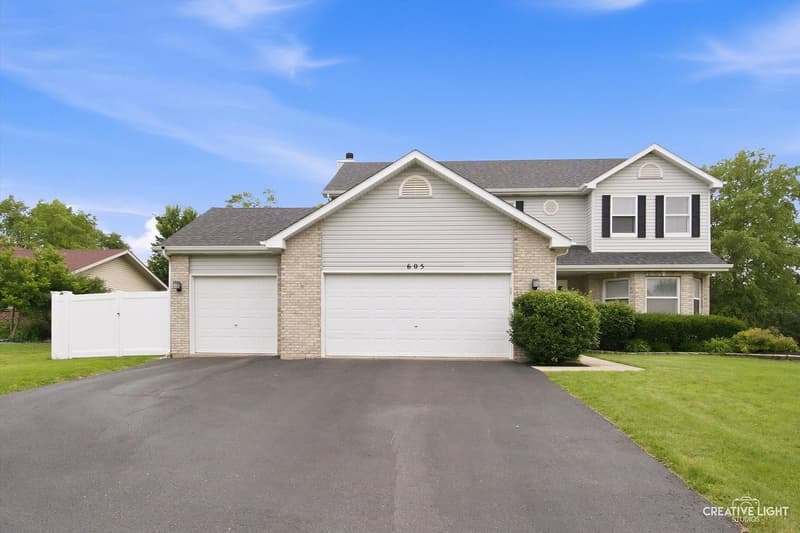 $466,000605 Woodchuck Trl, OswegoClosed August 24, 2026
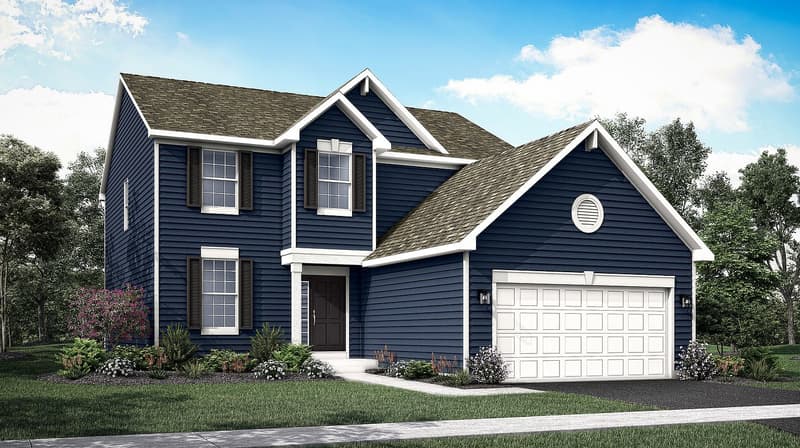 Represented the buyer$520,000707 Erwin St, OswegoClosed August 21, 2026

The properties shown here are transactions I personally represented, compiled from my public agent record. This site is not an MLS IDX feed and does not show the full active market; ask me and I will pull everything that fits.
Living in Oswego
About Oswego
Oswego is a Kendall County municipality with a population of 36,375 residents. The area includes 17 residential neighborhoods and preserves local history at the Little White School Museum.
The village provides driving connections to several regional employment centers and travel hubs. Downtown Naperville sits 12.9 miles away, which requires a drive of 32 minutes. Travel to O'Hare International Airport covers 43.2 miles and takes 70 minutes by car. Reaching The Loop requires a drive of 89 minutes across a distance of 46.5 miles.
These commutes tend to suit buyers who work in nearby suburban job corridors rather than central Chicago. The housing stock across the 17 neighborhoods accommodates buyers looking for residential properties outside the denser city core. You can turn to the market section below to examine local pricing trends, sales data, and current inventory.
Is Oswego a good place to live?
Oswego is a Kendall County community that covers 16.2 sq mi of land area. The municipality records an overall population of 36,375 distributed across 12,243 individual households. Residential neighborhoods define much of the local setting, and owner-occupied homes account for 87.9% of all occupied housing units. In addition, the local building stock reflects steady expansion, indicated by an overall median year built of 2002.
Pricing across the village corresponds directly with this newer construction and prominent ownership rate. When you evaluate home purchases in the market, you will encounter a median home value of $344,500. For households that choose to rent instead, the area presents an established median rent of $1,860. These housing expenses align with local household earnings, reflected in a median household income of $123,792. For daily employment travel, the area records an average commute time of 31 minutes. Together, these housing values, earning levels, and commute durations provide the primary baseline facts you need to understand Oswego.
Oswego at a glance
Covering 16.2 square miles in Kendall County, Oswego includes 12,243 households, a population of 36,375, and a median build year of 2002. The figures below give you key local metrics, including an 87.9% owner-occupied housing share, median home values, and typical commute times.
Homes and neighborhoods in Oswego
Much of the residential building in Oswego dates from recent decades, with 45.1 percent of homes built between 2000 and 2009. The historic core sits in Downtown Oswego, where properties date from the late 19th to the mid-20th century. You will find Victorian styles, Craftsman houses, and vernacular cottages arranged along a traditional street grid with mature trees. These single-family residences typically feature detached garages. The downtown area also includes mixed-use commercial buildings that feature upper-floor apartments.
Subdivisions developed throughout the 2000s make up a large portion of local residential streets. Churchill Club features two-story traditional single-family homes and attached multi-unit townhomes built primarily in the mid-2000s. These residences include two- to three-car garages along curvilinear streets and cul-de-sacs. Blackberry Crossing also developed during the 2000s on standard suburban lots. It provides two-story traditional single-family houses and attached townhomes with two-car garages. Nearby, Ogden Falls took shape in the early to mid-2000s with two-story houses and attached townhomes with front-loading garages.
Gates Creek offers housing built mainly in the late 1990s and early 2000s. The neighborhood includes both two-story and ranch-style single-family houses on quarter- to third-acre lots. Properties there feature attached two- and three-car garages set along winding suburban roads. Additional residential subdivisions across Oswego include Fox Chase, Prescott Mill, River Run, and Deerpath Creek Villa.
The Oswego housing market
The Oswego housing market experienced steady price growth across the 12 months ending in August 2026. In September 2025, the median sold price stood at $438,500 with 10 closed transactions. By August 2026, the median sold price rose to $452,000 with 12 closed transactions. Supply remained consistent, moving from 16 new listings in September 2025 to 15 new listings in August 2026.
Properties also moved through the market at a faster rate over this 12-month span. The average days on market dropped from 28 days in September 2025 down to 25 days in August 2026. Final sale prices aligned more closely with asking prices across this same period. The list-to-sale price ratio rose from 97.7 percent in September 2025 to 98.9 percent in August 2026. You can review the market report for detailed historical data, inventory updates, and recent sales figures.
Housing stock
When you look at housing in Oswego, single-family detached homes make up 71.6% of the inventory. Single-family attached homes account for 18.4%, while multi-unit properties represent 10.0% of local residences.
Much of the village took shape after 2000. Homes built between 2000 and 2009 comprise 45.1% of all housing, and residences built in 2010 or later add another 13.6%. Properties constructed between 1970 and 1999 represent 33.3% of the community. You will encounter fewer older structures, as 4.7% were built from 1940 through 1969, and 3.2% date to before 1940.
Schools serving Oswego
Public education in Oswego is provided through two unified school districts. Oswego Community Unit School District 308 serves students from prekindergarten through twelfth grade across its boundaries. Portions of the community fall within Yorkville Community Unit School District 115, which also covers prekindergarten through twelfth grade. Both districts operate as unified public school systems managing education across these grade levels. You can verify specific residential parcel boundaries directly with district administrative offices before purchasing a home.
Getting around
Your driving routes from Oswego connect you to several key destinations across the region. A drive to Downtown Naperville covers 12.9 miles and takes 32 minutes. If you are heading out to O'Hare International Airport, the drive spans 43.2 miles and takes 70 minutes. Commuting all the way to The Loop requires a drive of 46.5 miles, which takes 89 minutes.
For public transportation, you can utilize the Oswego Park-N-Ride. This transit location offers a dedicated departure point when you commute without driving your car the entire distance.
Things to do in Oswego
You can explore several municipal public spaces throughout the area, including Hudson Crossing Park, Prairie Point Community Park, and Violet Patch Park. These parks provide dedicated open grounds for outdoor recreation, sports, and relaxation. If you enjoy walking, running, or cycling, you can connect to the Fox River Trail and the Waubonsie Trail. In addition, you can spend an afternoon practicing your swing or playing a round at Fox Bend Golf Course.
For commercial services, dining, and shopping, you can head to Kendall Marketplace and Prairie Market. These retail centers offer a wide variety of storefronts, services, and eateries close to residential areas. You can run everyday errands, pick up household necessities, and enjoy meals at the various spots situated across both shopping developments. Having these commercial hubs in town makes everyday errands quick and convenient.
When you want to experience local events and entertainment, you can attend live performances and public gatherings at Venue 1012. You can also spend time at the Oswego Public Library, which offers educational resources, books, and regular community activities. Between outdoor concerts at Venue 1012 and gatherings at the library, you will find plenty of local entertainment and events on the community schedule.
Working in Oswego
Local employment includes opportunities within the regional healthcare sector. Rush Copley Medical Center serves as a major employer for the community. As a hospital within its health system, the facility anchors medical employment in the area. You can explore positions with this health system if you plan to work close to home. Rush Copley Medical Center continues to function as a key hospital and a major employer.
Pros and cons of living in Oswego
Buying in Oswego provides access to newer residential properties, where the median year built is 2002. In August 2026, the median sold price reached $452,000, and homes spent an average of 25 days on the market. Properties sold at 98.9% of their original list prices during that month. In addition, reaching Downtown Naperville involves a 12.9-mile drive that takes 32 minutes. Owner-occupied properties make up 87.9% of the local housing stock.
Commute times to regional transport hubs and major employment centers remain a key consideration. A drive to The Loop spans 46.5 miles and takes 89 minutes. Traveling 43.2 miles to O'Hare International Airport takes 70 minutes by car. The average local commute takes 31 minutes. Available housing inventory also remains tight, with August 2026 recording 15 new listings and 12 closed sales.
Sources: U.S. Census Bureau ACS 5-year; U.S. Census Bureau TIGER.
Tell me what you're trying to do
Buying, selling, or still deciding, a short note is enough to start. You'll get a real reply from me, not an auto-responder.
- A person reads every message
- No drip campaign, no lead-sharing with other agents
- Happy to answer one question and leave it there
Talk to someone who works Oswego
I have 2 years in these neighborhoods and answer personally.