Elgin, IL real estate
Homes for sale, the monthly market report, selling, and the neighborhoods, all on one page for Elgin. Median value $368K, 48 days on market.
Elgin, IL holds about 40,523 homes, 72% of them owner-occupied, with a median year built of 1977. Historic neighborhoods feature Victorian and early twentieth-century architecture alongside modern subdivisions. Housing price points contrast with newer construction in central Cook County. Buyers weigh lot size and architectural character against daily travel times to eastern employment centers.
One transaction closed in Elgin; the properties are below.
Source: Redfin (through May 2026) · U.S. Census ACS (2024)

Elgin on record
- Population
- 114,934
- Households
- 39,317
- Median household income
- $90,282
- Median home value
- $273,000
- Median rent
- $1,361
- Owner-occupied
- 71.9%
- Median year built
- 1977
- Average commute
- 28 min
- County
- Kane County
- Land area
- 38.3 sq mi
Source: U.S. Census Bureau ACS 5-year, 2020–2024 5-year estimate; U.S. Census Bureau TIGER, Vintage 2024. Retrieved September 2026.
Neighborhoods in Elgin
Downtown Elgin
Downtown Elgin spans both banks of the Fox River.
Spring-Douglas Historic District
Located directly north of downtown along the east bank of the Fox River, this district was listed on the National Register of Historic Places in 2000.
Gifford Park
Gifford Park is a historic residential neighborhood situated directly east of downtown Elgin.
Century Oaks
Century Oaks is a west side residential subdivision primarily built out during the mid-twentieth century.
Bowes Creek Country Club
Bowes Creek Country Club is a master-planned community situated on Elgin southwest edge.
Providence
Providence is a master-planned residential community located on the far west side of Elgin near Route 20.
Also in Elgin: Boulevard Villa, Catatoga, Century Oaks West, College Green, College Park, Columbia Park, Copper Springs, Country Knolls, Eagle Heights, Edgewater, Elgin Historic District, Fox River Acres, Fox River Farms, Hidden Hill, Highland Woods, Illinois Park, Maple Manor, Mulberry Grove, Randall Ridge, Remington at Providence, Remington Meadows, Schneider's Subdivision, Seasons At Elgin, Shadow Hill, Tall Oaks, The Greens of Elgin, The Reserve, Tuscan Woods, Valley Creek, Wedgewood Acres, Weldwood Oaks, West Point Gardens, West Ridge Village, Williamsburg Common, Williamsburg Green, Windmere Cove, Woodbridge South and Woodridge North. These have no page of their own yet; ask about any of them.
The Elgin market right now
The Elgin median sold price stands at $368,000 as of May 2026, +4.5% year over year. The twelve-month peak was $368,000 in May 2026. 1,177 homes closed over the period, averaging 101.3% of list price most recently, with 48 days on market.
Elgin neighborhoods side by side
| Neighborhood | Housing stock |
|---|---|
| Downtown Elgin | Residential housing consists primarily of mid-rise condominium buildings and converted historic lofts dating from the late 19th century through the 2000s, arranged in an urban grid along the Fox River. |
| Spring-Douglas Historic District | The housing stock features Queen Anne, Italianate, and Craftsman single-family homes built between the 1880s and 1920s. Properties typically sit on narrow lots along a grid street pattern with detached rear garages. |
| Gifford Park | Single-family residences in Queen Anne, Victorian, and bungalow styles date mostly from the late 1800s to early 1900s. Lots are typically compact with mature tree cover and detached garages accessed by alleys or side drives. |
| Century Oaks | Constructed primarily in the 1950s and 1960s, this subdivision features ranch, split-level, and two-story single-family homes. Lots average around a quarter to a third of an acre along curvilinear streets with attached garages. |
| Bowes Creek Country Club | Developed from the late 2000s through the 2020s, this master-planned community includes single-family homes and attached townhomes. Properties feature multi-car garages, two-story or ranch layouts, and winding street networks. |
| Providence | Built starting in the mid-2000s, housing includes two-story single-family homes and attached townhomes with two- to three-car garages. The neighborhood follows a suburban street design with cul-de-sacs and sidewalks. |
School districts in Elgin
From public records, with the source for each. District boundaries do not follow city lines; check the address with the district.
School District U-46
Grades PK–12 · Unified district · NCES EDGE school district boundaries 2024-2025, September 2026
Central Community Unit School District 301
Grades PK–12 · Unified district · NCES EDGE school district boundaries 2024-2025, September 2026
Community Unit School District 300
Grades PK–12 · Unified district · NCES EDGE school district boundaries 2024-2025, September 2026
St. Charles Community Unit School District 303
Grades PK–12 · Unified district · NCES EDGE school district boundaries 2024-2025, September 2026
Districts are listed by name and source only, never by rating: choosing a home by school quality is yours to weigh, and fair-housing law keeps an agent out of steering it.
One closing in Elgin
Not a feed of everything on the market: these are the Elgin properties I personally represented.
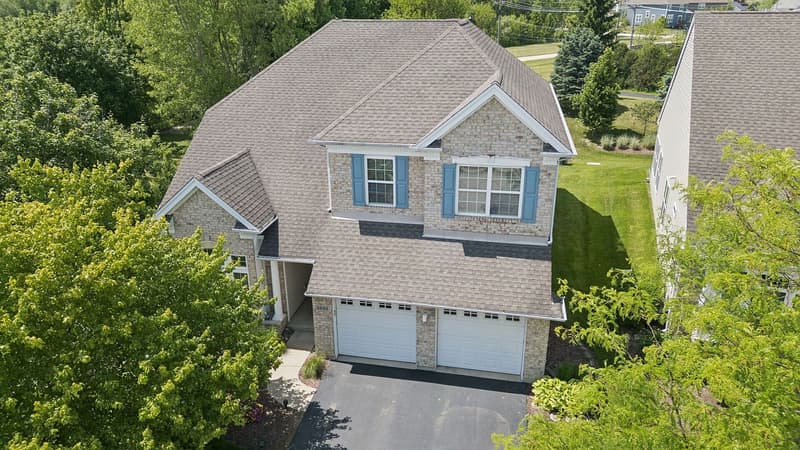 Represented the buyer$525,0003898 Valhalla Dr, ElginClosed August 14, 2026
The properties shown here are transactions I personally represented, compiled from my public agent record. This site is not an MLS IDX feed and does not show the full active market; ask me and I will pull everything that fits.
Living in Elgin
About Elgin
Elgin is a Kane County municipality with a population of 114,934, divided into 44 neighborhoods. The city connects drivers directly to several major employment and travel destinations. Reaching Schaumburg (Woodfield) takes 27 minutes by car over a distance of 18.6 miles. A drive to O'Hare International Airport covers 29.7 miles and requires 41 minutes of travel time. Commuting into The Loop requires an 84-minute drive over a distance of 42.6 miles.
The location accommodates residents who prioritize road connections to Schaumburg (Woodfield) or regular travel through O'Hare International Airport. Because the city contains 44 neighborhoods, you will encounter diverse residential settings across Kane County. Housing throughout these sections gives you alternatives to living closer to The Loop while retaining highway access. You can evaluate property values, listing trends, and price changes in the market section below.
Is Elgin a good place to live?
Elgin encompasses 38.3 square miles of land in Kane County. The city has an overall population of 114,934 across 39,317 separate households. If you examine the local housing market, owner-occupied homes make up 71.9% of the occupied properties. The median value for a home in Elgin is $273,000. If you choose to lease, the median rent is $1,361 per month. The median year built for residential structures in the city is 1977.
Financial and transit benchmarks supply additional context for daily living in the area. The median household income in Elgin is $90,282. For your daily travel to work, the average commute time is 28 minutes. When you look at Elgin, these verified data points establish clear baselines for property costs, household finances, and transit times. The combination of established housing, a 71.9% homeownership rate, and a 28-minute commute illustrates the everyday framework of the city. These figures allow you to assess the physical size, housing inventory, and typical expenses found throughout the community.
Elgin at a glance
The figures in this table establish a baseline overview of housing and community measures across 38.3 square miles in Kane County. You can examine these metrics to understand local residential property values, median household income, and typical daily commute times before exploring specific neighborhoods.
Homes and neighborhoods in Elgin
In Downtown Elgin, you will find mid-rise condominium buildings and converted historic lofts along an urban grid beside the Fox River. These residential properties date from the late 19th century through the 2000s. The Spring-Douglas Historic District features Queen Anne, Italianate, and Craftsman single-family homes built between the 1880s and 1920s. Properties there sit on narrow lots along a grid street pattern with detached rear garages. In Gifford Park, single-family Queen Anne, Victorian, and bungalow residences date mostly from the late 1800s to early 1900s. These homes occupy compact lots with mature tree cover and feature detached garages accessed by alleys or side drives.
Subdivisions developed in later decades show different street designs and architectural profiles. Constructed primarily in the 1950s and 1960s, Century Oaks features ranch, split-level, and two-story single-family homes. Lots average around a quarter to a third of an acre along curvilinear streets with attached garages. Providence, built starting in the mid-2000s, includes two-story single-family homes and attached townhomes with two- to three-car garages. This neighborhood follows a suburban layout with cul-de-sacs and sidewalks. Bowes Creek Country Club, developed from the late 2000s through the 2020s, also offers single-family homes and attached townhomes. Properties in that community feature multi-car garages, two-story or ranch layouts, and winding street networks.
According to Census estimates, 38.1% of the city's housing was built between 1970 and 1999. Homes constructed from 1940 to 1969 account for 21.9%, and residences built before 1940 make up 18.9%. Properties built from 2000 through 2009 represent 13.8%, while 7.3% date from 2010 and later. Other residential areas across the city include Edgewater, College Green, and Century Oaks West.
The Elgin housing market
The Elgin housing market recorded steady price growth across the 12-month period ending in August 2026. The median sold price increased from $416,500 in September 2025 to $427,000 in August 2026. Overall sales volume rose as closed transactions increased from 28 to 33 homes. Inventory also expanded, with new listings rising from 31 in September 2025 to 41 in August 2026.
Marketing times remained stable across the entire year. Properties spent an average of 22 days on the market in September 2025 compared to 23 days in August 2026. The sale-to-list price ratio moved from 97.4 percent down to 96.3 percent over the same period. You can consult the complete market report to review the full dataset and monitor local trends.
Housing stock
Single-family detached houses make up 61.9% of the residential options in Elgin. Multi-unit properties account for 21.1% of the inventory, while single-family attached homes represent 13.9%. Manufactured and other housing types make up the remaining 3.0% of local structures.
Homes built between 1970 and 1999 form the largest share at 38.1%. Mid-century construction from 1940 through 1969 represents 21.9%, and residences built before 1940 contribute 18.9%. Properties built between 2000 and 2009 make up 13.8%, followed by homes constructed in 2010 and later at 7.3%. As you tour local neighborhoods, you will encounter properties spanning each of these distinct construction periods.
Schools serving Elgin
Depending on your address, four unified public school districts serve students living in Elgin. School District U-46 educates students from prekindergarten through grade 12. Central Community Unit School District 301 also serves students from prekindergarten through grade 12. Additionally, Community Unit School District 300 and St. Charles Community Unit School District 303 provide education from prekindergarten through grade 12 across their respective boundaries.
For postsecondary education, nearby institutions include Elgin Community College and Judson University.
Getting around
Driving from Elgin connects you to key destinations across the region. Driving to Schaumburg (Woodfield) takes 27 minutes for an 18.6-mile trip. A drive to O'Hare International Airport covers 29.7 miles and takes 41 minutes. Traveling to The Loop by car takes 84 minutes across 42.6 miles.
Public transit routes serve the area through the Elgin station and the Big Timber station. A transit trip to Schaumburg (Woodfield) covers 20.6 miles and takes 63 minutes. Traveling by transit to O'Hare International Airport takes 64 minutes over 28.5 miles. Transit to The Loop spans 40.7 miles and takes 96 minutes.
Things to do in Elgin
You can spend time outdoors at several public parks located throughout Elgin. Lords Park offers expansive grounds, playgrounds, and sports fields for recreational use. Wing Park provides additional open space along with community athletic amenities and swimming facilities. You can also visit Festival Park, which features riverfront paths and open lawn areas. The Fox River Trail runs through town, giving you a paved corridor for bicycling, running, and walking along the water.
Golfers in Elgin have multiple courses available for daily play and practice. You can book rounds at The Highlands of Elgin Golf Course or visit Bowes Creek Country Club. If you want cultural events, The Hemmens hosts live stage productions and musical performances during the year. The Gail Borden Public Library District: Main Library provides study areas, book collections, and local reference resources.
Elgin provides convenient locations for local retail and indoor shopping across the city. You can visit the Elgin Shopping Mall to browse specialty stores, apparel counters, and local marketplace vendors. This indoor venue gives you access to a variety of small merchants, retail goods, and personal services. Between the public parks, golf courses, and civic destinations, you have steady options for activities across the community.
Working in Elgin
Healthcare is a primary employment sector you will find in Elgin. The city includes major employers anchored in the regional health system. Advocate Sherman Hospital operates in Elgin as a major hospital employer. Saint Joseph Hospital - Elgin also serves as a major employer in the local healthcare system. You will find that both of these organizations contribute to the local hospital employment base in the city.
Pros and cons of living in Elgin
On the advantage side, Elgin provides steady housing options across a 38.3-square-mile area in Kane County. The Census median home value is $273,000, and median rent is $1,361 per month. Owner-occupied housing accounts for 71.9 percent of the 39,317 households in the city. In August 2026, the local market saw 41 new listings and 33 closed sales. In addition, reaching Schaumburg requires a 27-minute drive across 18.6 miles.
On the trade-off side, travel to central regional destinations requires significant driving time. Driving to the Loop covers 42.6 miles and takes 84 minutes. The trip to O'Hare International Airport spans 29.7 miles and takes 41 minutes. The overall average commute for residents is 28 minutes. In August 2026, the median sold price reached $427,000, and buyers paid 96.3 percent of list price. Residential inventory reflects an older footprint, with a median build year of 1977.
Sources: U.S. Census Bureau ACS 5-year; U.S. Census Bureau TIGER.
Tell me what you're trying to do
Buying, selling, or still deciding, a short note is enough to start. You'll get a real reply from me, not an auto-responder.
- A person reads every message
- No drip campaign, no lead-sharing with other agents
- Happy to answer one question and leave it there
Talk to someone who works Elgin
I have 2 years in these neighborhoods and answer personally.