Naperville, IL real estate
Homes for sale, the monthly market report, selling, and the neighborhoods, all on one page for Naperville. Median value $620K, 42 days on market.
Naperville, IL holds about 57,135 homes, 75% of them owner-occupied, with a median year built of 1990. Single-family neighborhoods like Pembroke Greens feature mature lots and established streetscapes. Downtown parcels and newer subdivisions offer varied lot dimensions and floor plans. Buyers weigh established residential locations against newer developments in neighboring Plainfield or Lisle. Purchase choices balance local commercial access against property price points.
Three transactions closed in Naperville; the properties are below.
Source: Redfin (through May 2026) · U.S. Census ACS (2024)

Naperville on record
- Population
- 150,692
- Households
- 54,847
- Median household income
- $155,105
- Median home value
- $540,200
- Median rent
- $1,885
- Owner-occupied
- 74.8%
- Median year built
- 1990
- Average commute
- 30 min
- County
- DuPage County
- Land area
- 39.4 sq mi
Source: U.S. Census Bureau ACS 5-year, 2020–2024 5-year estimate; U.S. Census Bureau TIGER, Vintage 2024. Retrieved September 2026.
Neighborhoods in Naperville
Cress Creek
Cress Creek is a residential subdivision in northern Naperville situated around the Cress Creek Country Club golf course.
White Eagle
White Eagle is a planned residential community in western Naperville built largely in the 1990s and early 2000s.
Ashbury
Ashbury is a master-planned subdivision in southern Naperville developed in the 1990s.
Hobson West
Hobson West is a subdivision located just southwest of downtown Naperville, established in the 1970s.
Saybrook
Saybrook is a northern Naperville subdivision developed primarily in the 1960s and 1970s.
Brookdale
Brookdale is a north Naperville subdivision platted in the 1970s and 1980s, bounded roughly by Interstate 88 to the north and Diehl Road.
Also in Naperville: Ashwood Creek, Ashwood Park, Ashwood Pointe, Atwater, Breckenridge Estates, Brookwood Trace, Brush Hill, Carillon Club, Carriage Hills, Century Farms, Clow Creek Farm, East Highlands, Harmony Grove, High Meadow, Hobson Village, Knoch Knolls, Lakewood Crossing, Maplebrook, Naperville Historic District, Old Farm, Pembroke Greens, River Run, Riverwoods, Rose Hill Farm, Saddle Creek, South Pointe, Spring Hill, Springbrook, Stillwater, Tall Grass, The Fields, Timber Creek, Townhomes of the Fields, Villages of West Glen, Villas of the Fields, Wagner Farms, West Highlands, Westwind, Wheatland South and Winding Creek. These have no page of their own yet; ask about any of them.
The Naperville market right now
The Naperville median sold price stands at $620,000 as of May 2026, -4.6% year over year. The twelve-month peak was $650,000 in June 2025. 1,643 homes closed over the period, averaging 100.3% of list price most recently, with 42 days on market.
Naperville neighborhoods side by side
| Neighborhood | Housing stock |
|---|---|
| Cress Creek | Developed primarily between the 1960s and 1980s, this subdivision contains custom single-family homes and townhomes in colonial, ranch, and split-level styles. Houses typically range from 2,500 to 4,500 square feet with attached garages on quarter- to half-acre lots along winding streets. |
| White Eagle | Built mainly in the 1990s and 2000s, this master-planned community features brick traditional single-family homes and attached townhomes. Detached homes generally span 3,000 to 5,500 square feet on quarter- to half-acre lots arranged along cul-de-sacs with three-car garages. |
| Ashbury | Constructed during the 1990s, this subdivision consists of two-story traditional and colonial single-family homes. Residences typically measure between 2,500 and 4,000 square feet with two- or three-car garages, situated on curvilinear streets and cul-de-sacs with quarter- to third-acre lots. |
| Hobson West | Built largely in the late 1970s and 1980s, the neighborhood features two-story colonial and transitional single-family houses. Homes typically range from 2,400 to 3,800 square feet on mature, third-acre lots along curvilinear interior streets with attached two-car garages. |
| Saybrook | Established in the late 1960s and 1970s, this fully built-out neighborhood features two-story colonials, split-levels, and ranches. Single-family homes average 2,000 to 3,000 square feet and sit on quarter-acre lots along winding roads with attached two-car garages. |
| Brookdale | Developed predominantly in the 1970s and 1980s, the area contains two-story colonials, split-level single-family houses, and attached townhomes. Detached residences typically range from 1,800 to 2,800 square feet on quarter-acre lots with attached two-car garages. |
School districts in Naperville
From public records, with the source for each. District boundaries do not follow city lines; check the address with the district.
Naperville Community Unit District 203
Grades PK–12 · Unified district · NCES EDGE school district boundaries 2024-2025, September 2026
Community Unit School District 200
Grades PK–12 · Unified district · NCES EDGE school district boundaries 2024-2025, September 2026
Indian Prairie Community Unit School District 204
Grades PK–12 · Unified district · NCES EDGE school district boundaries 2024-2025, September 2026
Plainfield School District 202
Grades PK–12 · Unified district · NCES EDGE school district boundaries 2024-2025, September 2026
Valley View Community Unit School District 365U
Grades PK–12 · Unified district · NCES EDGE school district boundaries 2024-2025, September 2026
Districts are listed by name and source only, never by rating: choosing a home by school quality is yours to weigh, and fair-housing law keeps an agent out of steering it.
Three closings in Naperville
Not a feed of everything on the market: these are the Naperville properties I personally represented.
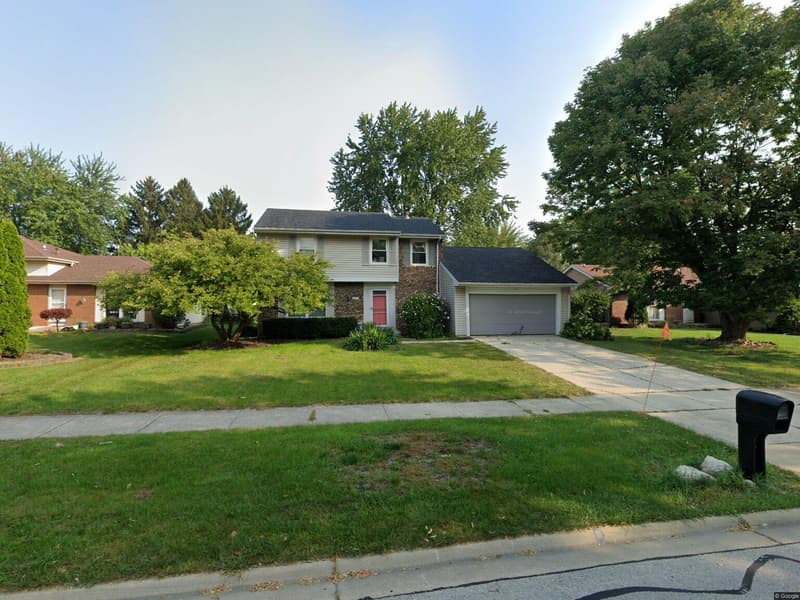 Represented the buyer$520,0001435 Sunnybrook Dr, NapervilleClosed September 21, 2026
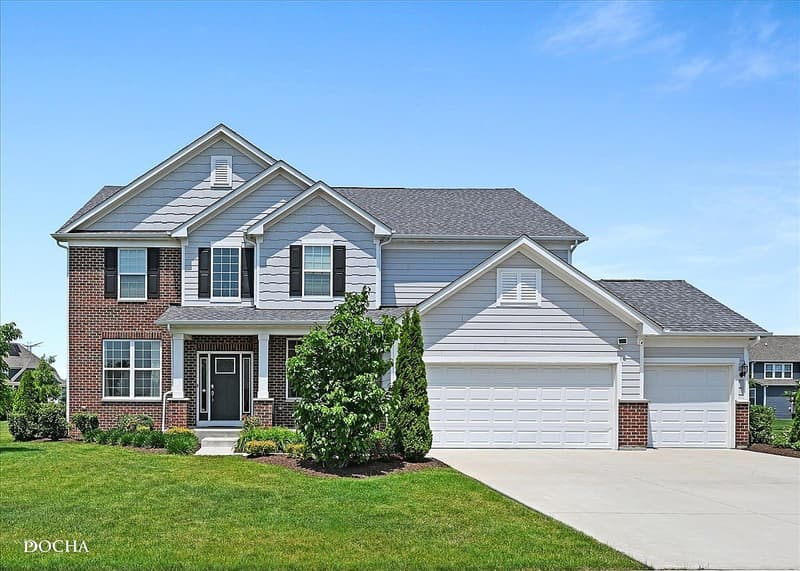 $967,5004327 Conifer Rd, NapervilleClosed September 21, 2026
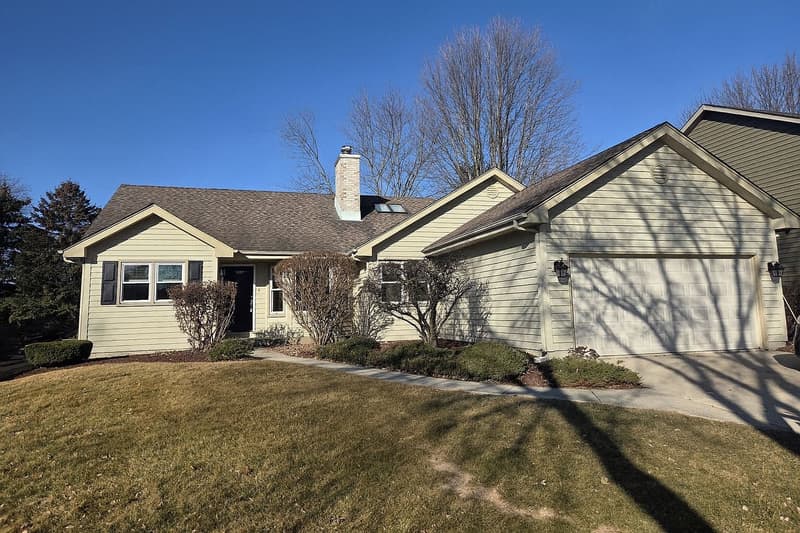 Represented the buyer$600,0003027 Brossman St, NapervilleClosed September 21, 2026

The properties shown here are transactions I personally represented, compiled from my public agent record. This site is not an MLS IDX feed and does not show the full active market; ask me and I will pull everything that fits.
Living in Naperville
About Naperville
Naperville is a DuPage County city with a population of 150,692 across 46 distinct neighborhoods. The city provides direct road connections to several regional destinations for daily commuters. Drivers reach Oak Brook in 30 minutes over a travel distance of 17.2 miles. Reaching O'Hare International Airport requires a drive of 30.7 miles, which takes 56 minutes. The drive to The Loop covers 34 miles and takes 79 minutes by car.
The community features local landmarks, including Naper Settlement and the Millennium Carillon. Housing across the 46 neighborhoods suits buyers who commute by car to employment centers in Oak Brook, as well as drivers heading to The Loop. You can examine detailed property pricing, inventory levels, and sales trends in the real estate market section below.
Is Naperville a good place to live?
Naperville encompasses a land area of 39.4 sq mi within DuPage County. The city has an overall population of 150,692 residents distributed across 54,847 households. For daily travel, local workers report an average commute time of 30 minutes. Economic measures show substantial earnings across the municipality, with a median household income of $155,105. Together, these figures reflect a large suburban center with an active local economy.
The local housing landscape consists primarily of established residential properties. Across the city, homes carry a median year built of 1990. Homeowners occupy the vast majority of local residences, resulting in an owner-occupied share of 74.8%. This steady rate of homeownership remains a prominent feature across the entire 39.4 sq mi community.
Local pricing offers direct benchmarks as you evaluate housing options in DuPage County. The median home value throughout the city is $540,200. For tenants considering a leased home, the median rent sits at $1,885 per month. Reviewing these home values, rental rates, and commute times gives you clear expectations before you begin touring properties.
Naperville at a glance
Naperville covers 39.4 square miles in DuPage County, with 54,847 households and a population of 150,692 across the city. The figures below detail baseline statistics on home values, rent levels, household incomes, and average travel times to help you evaluate the community.
Homes and neighborhoods in Naperville
Homes built between 1970 and 1999 make up 66.0% of the Naperville housing stock, according to Census Bureau estimates. In subdivisions established in the late 1960s and 1970s, you will find communities such as Saybrook and Cress Creek. Saybrook features two-story colonials, split-levels, and ranches averaging 2,000 to 3,000 square feet on quarter-acre lots with attached two-car garages. Cress Creek contains custom single-family homes and townhomes built from the 1960s to 1980s, spanning 2,500 to 4,500 square feet on quarter- to half-acre lots. Brookdale was developed in the 1970s and 1980s, offering attached townhomes as well as detached houses ranging from 1,800 to 2,800 square feet.
Neighborhoods constructed through the 1980s, 1990s, and 2000s introduce larger footprints on curvilinear streets and cul-de-sacs. Hobson West features two-story colonial and transitional houses from 2,400 to 3,800 square feet on mature, third-acre lots with attached two-car garages. Ashbury consists of two-story traditional and colonial residences built in the 1990s, measuring between 2,500 and 4,000 square feet. White Eagle features attached townhomes and brick traditional single-family homes ranging from 3,000 to 5,500 square feet with three-car garages.
Homes built from 2000 to 2009 represent 15.0% of the local stock, while residences built in 2010 and later account for 8.0%. You will also encounter residential subdivisions including Ashwood Park, Atwater, Century Farms, and East Highlands.
The Naperville housing market
The Naperville residential market showed steady price growth across the twelve-month period ending in August 2026. In September 2025, the median sold price stood at $494,500 with 61 closed sales. By August 2026, the median sold price rose to $512,000 across 58 closed transactions. Sellers introduced 73 new listings to the market in August 2026, compared to 54 new listings in September 2025.
Properties moved at a consistent pace across both periods. Homes spent an average of 19 days on the market in September 2025, and they averaged 20 days in August 2026. Buyers paid close to asking prices throughout the year. The list-to-sale price ratio measured 97.8% in September 2025 and registered at 97.6% in August 2026. You can review detailed inventory figures, price shifts, and transaction patterns in the linked market report.
Housing stock
Single-family detached homes represent 62.8% of the housing stock in Naperville. Multi-unit properties make up 24.7% of the total, single-family attached residences account for 12.2%, and manufactured housing comprises 0.4%.
You will find that most residential construction dates to the late twentieth century. Homes built between 1970 and 1999 account for 66.0% of the local inventory. Construction from 2000 through 2009 contributes 15.0%, while homes built in 2010 or later make up 8.0%. Older construction remains limited, as structures built from 1940 through 1969 account for 8.4%, and homes built before 1940 represent 2.5%.
Schools serving Naperville
Depending on your address, five unified public school districts serve students across Naperville. These include Naperville Community Unit District 203, Community Unit School District 200, and Indian Prairie Community Unit School District 204. Plainfield School District 202 and Valley View Community Unit School District 365U also educate local students. Each of these five school districts provides instruction from prekindergarten through twelfth grade.
For higher education options close to home, you will find North Central College in Naperville.
Getting around
Public transit connections run through the Naperville station and the Route 59 station. Taking transit to The Loop takes 59 minutes across 29.3 miles. If you drive to The Loop, the 34-mile trip takes 79 minutes.
Driving to Oak Brook takes 30 minutes for a distance of 17.2 miles. The transit trip to Oak Brook covers 18.6 miles and takes 99 minutes. For flights, driving to O'Hare International Airport takes 56 minutes over 30.7 miles. Taking transit to O'Hare International Airport covers 47.5 miles and takes 108 minutes.
Things to do in Naperville
You can spend time outdoors across extensive parklands and riverfront paths in the area. The Naperville Riverwalk provides a waterfront path through town, while Centennial Beach offers an outdoor swimming and recreation destination. If you enjoy hiking or biking, the DuPage River Trail connects through natural corridors and joins nearby park acreage. Knoch Knolls Park and Springbrook Prairie preserve large open spaces with additional trail systems and recreational fields. You can also play rounds of golf at Springbrook Golf Course and Naperbrook Golf Course.
For shopping, you can visit retail centers distributed across the community. Springbrook Prairie Pavilion provides an assortment of retail shops and everyday services in one accessible location. If you attend cultural events, Wentz Concert Hall & Fine Arts Center hosts concerts, fine arts performances, and community gatherings. You can also spend time reading or researching at the Naperville Public Library, which maintains the Nichols Library facility.
Outdoor paths and cultural facilities give you convenient choices for daily recreation throughout the city. You can walk along the Naperville Riverwalk to reach waterfront views, or you can exercise along the DuPage River Trail. Preserves at Springbrook Prairie and Knoch Knolls Park accommodate walking, trail exploration, and open field recreation. Together with performances at Wentz Concert Hall & Fine Arts Center and retail at Springbrook Prairie Pavilion, activities remain close to home.
Working in Naperville
Endeavor Health Edward Hospital operates as a major employer within Naperville. The hospital represents a significant presence in the local healthcare sector. As part of the Endeavor Health system, the institution maintains medical operations directly inside the community. You can find employment opportunities at this hospital without leaving town. Having Endeavor Health Edward Hospital in Naperville allows healthcare professionals to live and work in the same area.
Pros and cons of living in Naperville
Living in Naperville provides manageable travel times across its 39.4 square miles of land area. The typical commute time for local workers runs 30 minutes. You can drive 17.2 miles to Oak Brook in 30 minutes. The median year built for residential properties is 1990, and 74.8% of housing is owner-occupied. In August 2026, properties spent an average of 20 days on the market before closing.
Travel to distant regional destinations requires longer trips behind the wheel. Driving to The Loop covers 34 miles and takes 79 minutes. Reaching O'Hare International Airport spans 30.7 miles and requires a 56-minute drive. Housing expenses and limited inventory also factor into local planning. The median home value in this DuPage County community is $540,200, and median rent is $1,885. In August 2026, the median sold price was $512,000, with 73 new listings and 58 closed sales recorded.
Sources: U.S. Census Bureau ACS 5-year; U.S. Census Bureau TIGER.
Tell me what you're trying to do
Buying, selling, or still deciding, a short note is enough to start. You'll get a real reply from me, not an auto-responder.
- A person reads every message
- No drip campaign, no lead-sharing with other agents
- Happy to answer one question and leave it there
Talk to someone who works Naperville
I have 2 years in these neighborhoods and answer personally.